
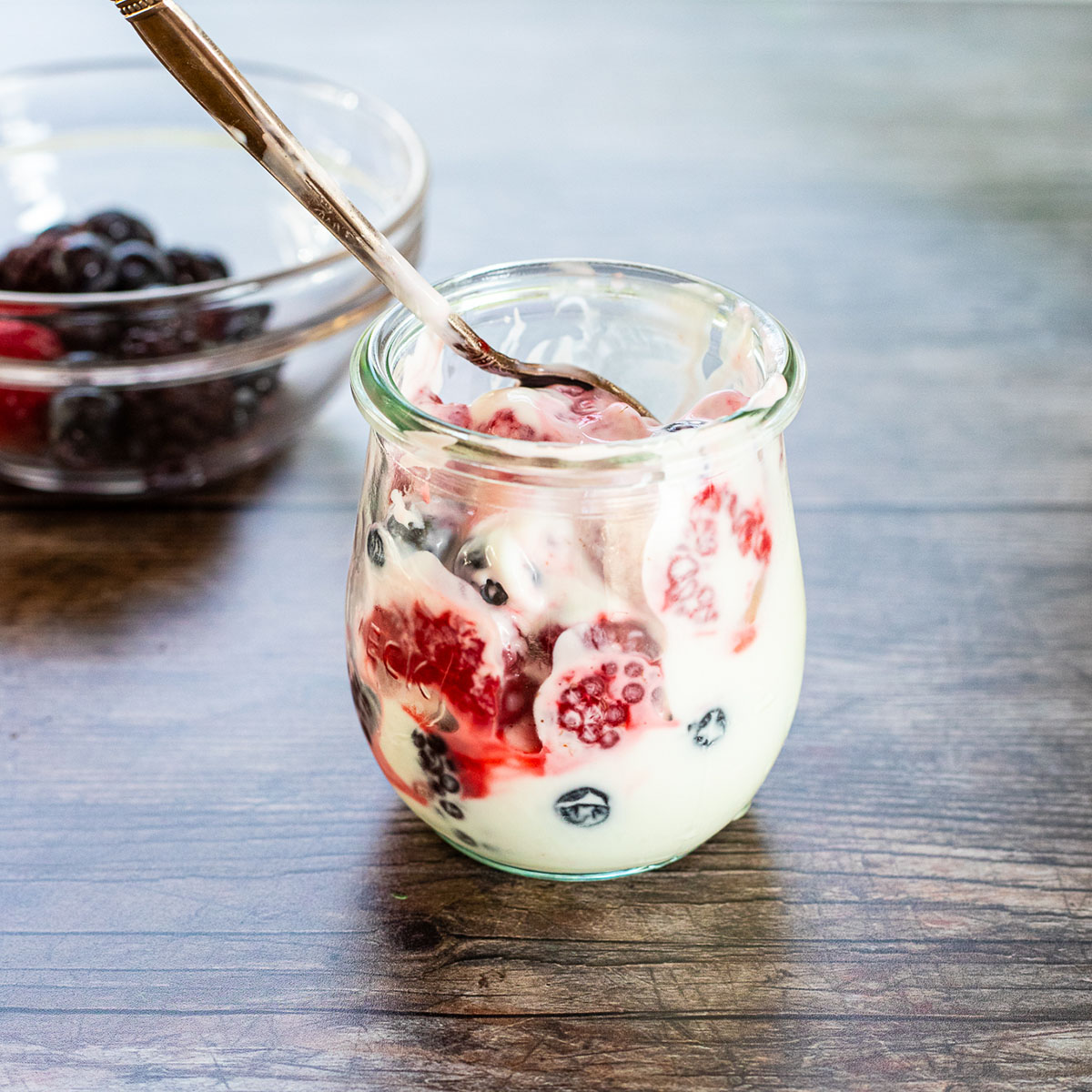
It takes just a few key ingredients to make creamy, smooth coconut yogurt: a yogurt starter (good bacteria), a small amount of gelatin or agar agar (natural thickener), and full-fat coconut milk.
I also add a bit of sweetener to make sure the good bacteria are well fed. The bacteria eat the sugars to produce lactic acid, which thickens the milk and gives the yogurt a tart flavor. Unlike dairy-based milk, which is rich in lactose (milk sugar), coconut milk doesn't have lactose, but it does have some sugars and starches for the bacteria to feed on. To make sure the bacteria have enough food, adding a bit of sweetener helps out in the fermentation process. Any natural sweetener can be used, including honey, maple syrup, or date paste.
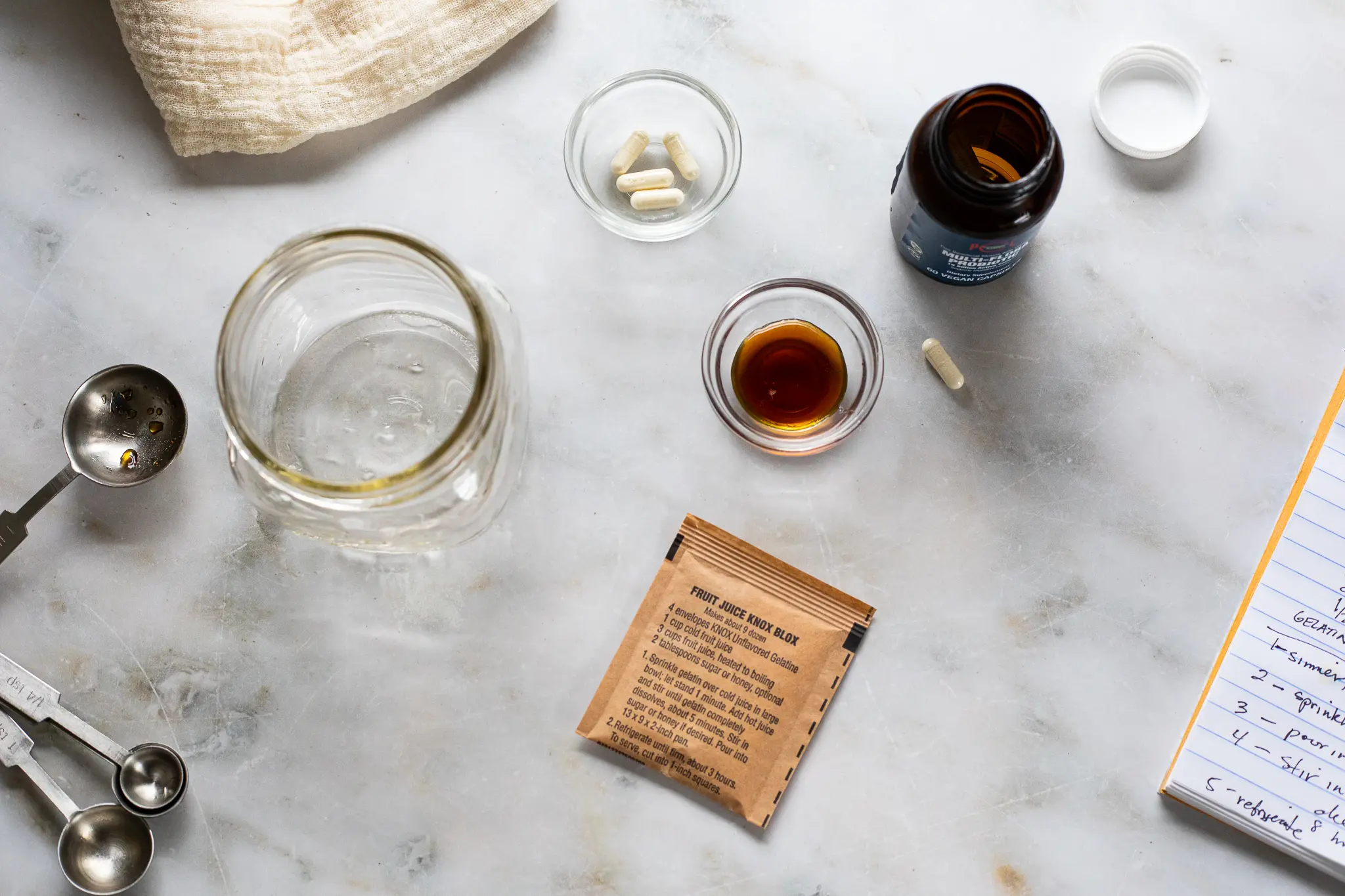
For yogurt starter you can use a probiotic capsule, a powder, or yogurt that has at least these two bacterial strains: S. thermophilus and L. bulgaricus. Many yogurt starters also add extra strains, including Lactobacillus acidophilus, Bifidobacterium, and Lactobacillus casei for added benefits.
Dairy-based yogurt is lactose-free when it's been fermented for 24 hours, and it's very tart at this point. Coconut yogurt is lactose-free regardless of how long you ferment the yogurt. So if you prefer it a bit less tart, culture it for about 8 hours or so and still have a lactose-free yogurt (especially SCD folks who may prefer a less tangy yogurt).
I recommend heating the coconut milk to 180⁰F to remove unwanted bacteria, pathogens, or yeast spores, and allow your added starter to thrive. The heated milk also helps the gelatin to dissolve. Make sure to cool the milk fully to about 100⁰F because I higher temperature will kill the bacteria in your yogurt starter.
To incubate the yogurt at between 100 and 110⁰F , I use a dehydrator. Many counter top ovens now have a dehydration option. Some other options include an oven with the light on, an Instant Pot, a yogurt maker, or a warming blanket. You just need to make sure it stays at a steady temperature throughout fermentation.
A note about gelatin: You can use gelatin powder or sheets. Sheets are less messy than powder. Powder tends to clump a bit, so when you sprinkle it in the warm coconut milk spread the granules wide and whisk immediately to further disperse and dissolve it. In general, one sheet of gelatin equals about 1 teaspoon of gelatin powder, however check the package to confirm exact measurements. Gelatin sheets bloom in cold water and then dissolve in warm liquid whereas gelatin powder dissolves in warm liquid.

How to Make Coconut Yogurt
Ingredients
- 13.5 ounces coconut milk, full-fat
- 1 teaspoon gelatin or agar agar
- 1 teaspoon sweetener maple syrup, honey, or other sweetener
- 1 tablespoon probiotic starter about 2 to 4 capsules, or yogurt
Instructions
- Clean your glass jars in hot soapy water or a dishwasher.
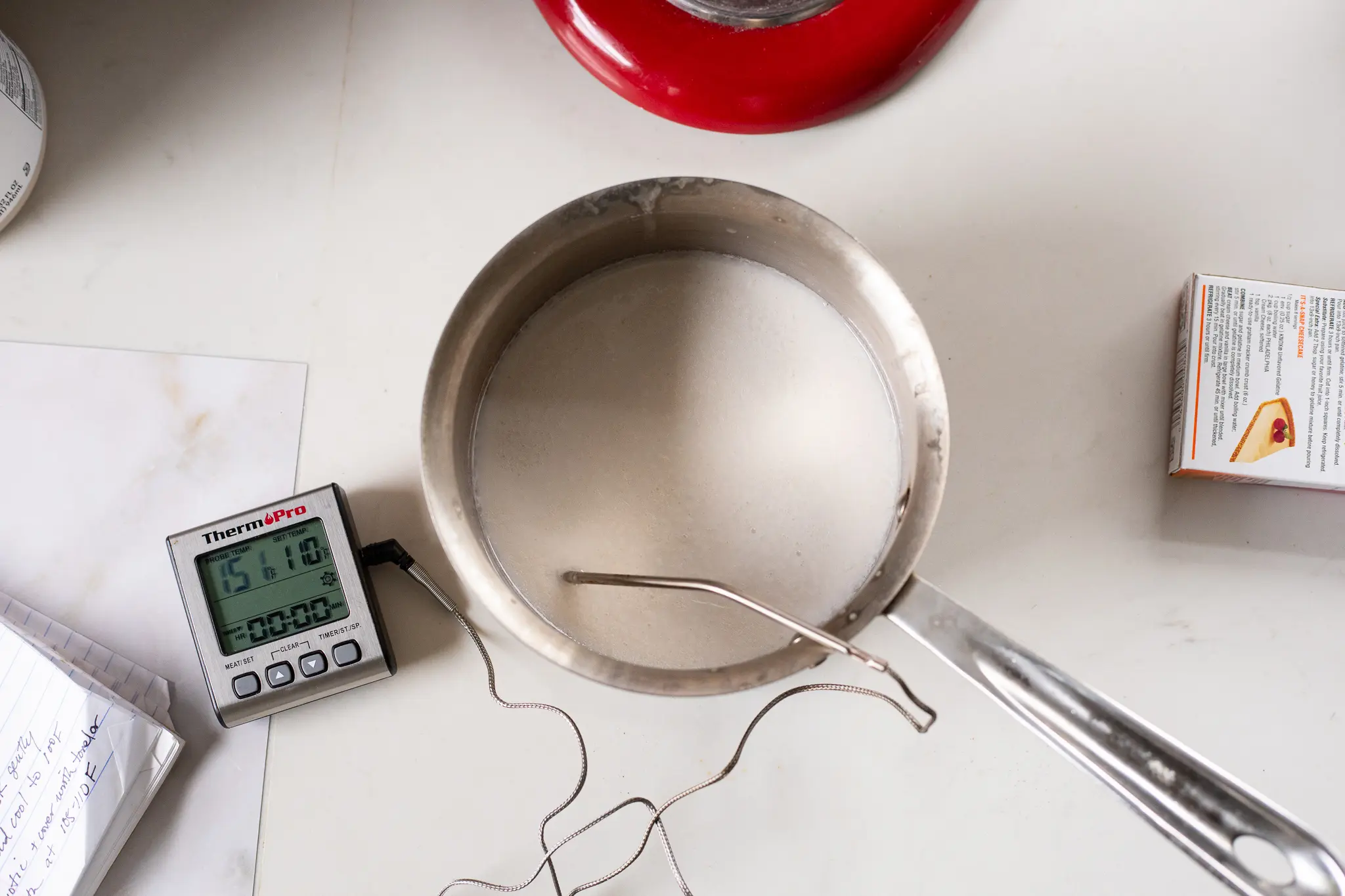
- Pour the coconut milk into a saucepan and gently warm it until small bubbles form on the edges and it reaches a temperature of 180℉. Avoid simmering or boiling it.
- Turn off the heat and move the saucepan to a cool location. Sprinkle the gelatin on the milk and whisk to dissolve it in the milk.
- Let the milk cool until it reaches 100℉. Add the probiotic and sweetener and whisk to blend it into the milk.
- Pour the milk into glass jars, lightly rest the jar cover on the top, and incubate the yogurt in a steady temperature of 105 to 110℉ for 8 to 24 hours. The longer you incubate it the tangier the yogurt will taste.
- Place the yogurt in the refrigerator for 12 to 24 hours to set it.
- Store the yogurt in the refrigerator for about a week.
Briget Porteus says
Hi Erica,
I made this yogurt recipe and it didn’t thicken, it is drinkable. I have made yogurt many times before and it came out thickened. I even put an oven thermometer in my dehydrator to make sure the temperature was correct. And I’ve always used the reduced fat coconut milk. Any help would be greatly appreciated!
Briget Porteus
Hi Bridget, I recommend full-fat coconut milk for this recipe. That said, if you want to use low-fat coconut milk I would double or even tripe the amount of gelatin. Hope that helps!
Joan says
Another question. When do I add the honey? I apologize if it’s in the recipe and I’ve missed it.
No worries, thanks for catching that!
Joan Henderson says
Hi Erica. I’m going to make this yogurt today and have a question about the probiotic. The one I have is a 45 billion capsule, with 4 bacterial strains. You suggest 4 capsules. Would this amount apply to my probiotic? Thanks.
PS I made your bagels yesterday. They are fabulous!!!
Joan says
Also, when do I add the honey?
Thank you, Joan! Just added it to the instructions. Add the honey when you add the probiotic/starter.
Hi Joan! Great to hear about the bagels :). For the probiotic capsule, it's variable but I'd say between 2 and 4 capsules or about one tablespoon of powder. You can probably use a little less if you don't add any sweetener but you may risk not culturing it enough.
Stephanie Hughes-Love says
Thank you!
Stephanie Hughes-Love says
Hi Erica,
If I’m using Danon plain yogurt as the starter, would I only use one tablespoon?
Hi Stephanie, yes, 1 tablespoon of plain yogurt.