

If you've been avoiding white rice because it's high in starch, there's a little trick you can do to reduce the amount of digestible starch and increase the amount of resistant starch. Compared to the freshly cooked version, rice that's higher in resistant starch reduces blood sugar spikes, lowers insulin resistance, and provides your microbiome with prebiotics. Resistant starch rice has up to 60% less carbs than freshly cooked rice.
Resistant starch is not digested in the same way as starch. It passes through your small intestine undigested and instead ferments in your colon (large intestine), feeding the good bacteria there. It ferments into short-chain fatty acids that boost gut health, decrease inflammation, and help keep you regular. Resistant starch also gives you a feeling of being full or more satiated because it is not quickly digested.
To increase the resistant starch content in rice, rinse the rice, then boil it, and finally cool it to room temperature and store it in the refrigerator for 24 hours. This trick also works with pasta, beans, and potatoes. You can further reduce the impact of starch by pairing the rice with protein, healthy fats, and vegetables, which slows digestion and absorption.
Here's my basic recipe for resistant starch rice using basmati rice, but feel free to use any rice you prefer. Long grain rice is claimed to have the highest level of resistant starch, however the overall percentages can vary a bit. The largest conversion to resistant starch happens by cooling and then refrigerating or freezing for 24 hours.
If you like to steam or pressure cook your rice, you might want to consider switching to boiling if your goal is to yield the highest amount of resistant starch. According to this study, boiling the rice yields the highest amount of resistant starch.
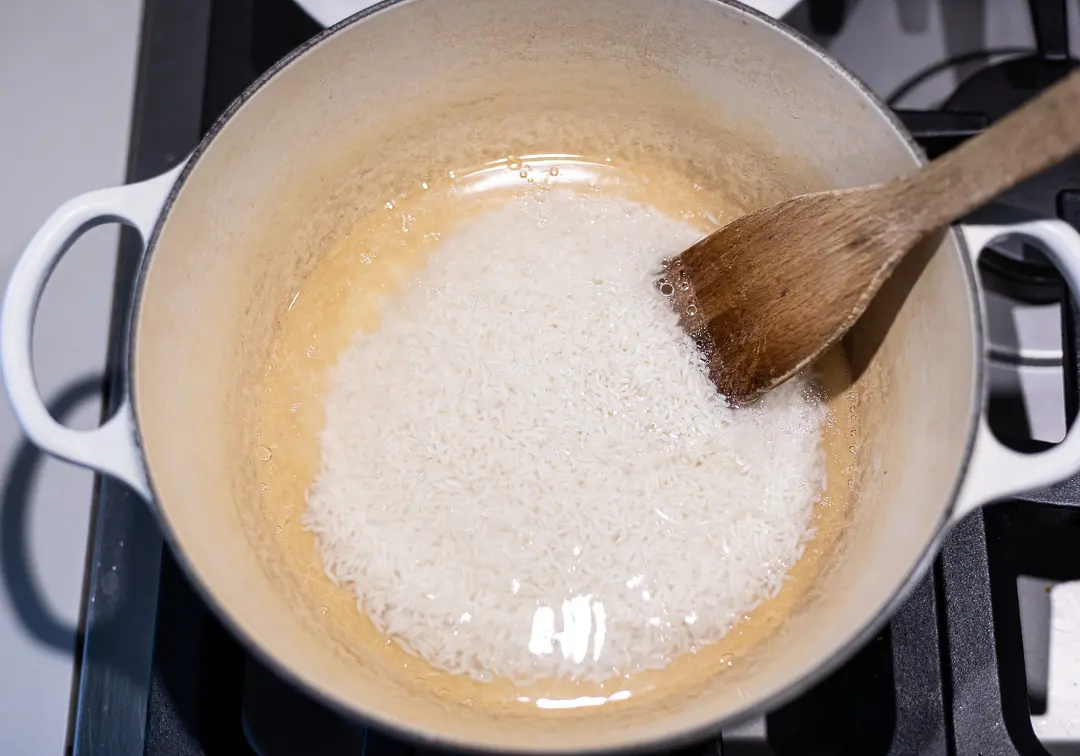
Another thing I do is add coconut oil to the rice. Adding olive oil, coconut oil, or other vegetable oil to rice while cooking contributes to an increase in resistant starch along with cooling and refrigeration. The fat binds to the starch molecules while cooking to further reduce absorption.
I haven't listed the nutritional facts for a rice serving because the carbohydrate measurement will vary based on your method and other factors. You can assume that up to 60% of the carbohydrates normally found in freshly cooked rice will be converted to resistant starch. For reference, freshly cooked rice has about four calories per gram of digestible starch, while resistant starch rice has about two calories per gram because about half (up to 60%) of the starch behaves like fiber and passes through your small intestine without being absorbed.
Have you been making resistant starch rice for a while? Let me know in the comments. I'd love to know your favorite ways to make it.
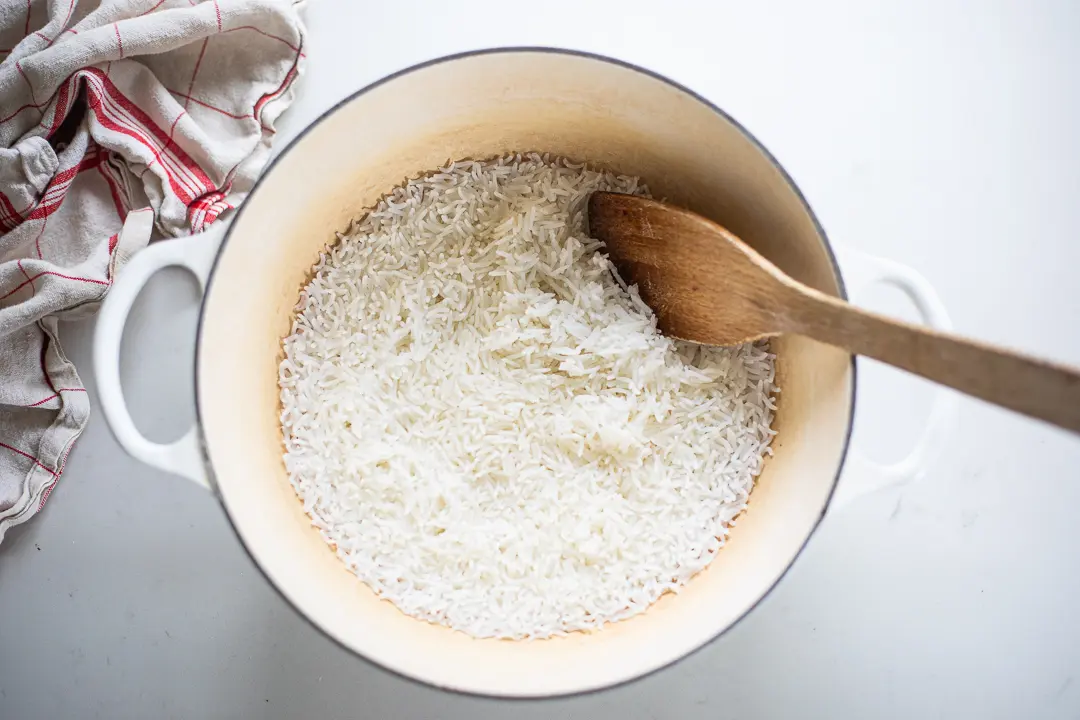
3. Cool the rice to room temperature and then refrigerate for 24 hours.
How to Make Resistant Starch Rice
Ingredients
- 1 cup basmati rice
- 2 cups water
- 1 teaspoon coconut oil
- ¼ teaspoon kosher salt
Instructions
- Rinse and drain the dry rice under running water it's no longer cloudy. This reduces excess surface starch.1 cup basmati rice
- Place a large stockpot over low to medium heat.
- Add the water and bring it to a boil.2 cups water
- Add the coconut oil to the water and stir to dissolve.1 teaspoon coconut oil
- Add the rice and salt and bring the water to a simmer.¼ teaspoon kosher salt, 1 cup basmati rice
- Cover and simmer for 20 minutes. The rice is done when all the water is absorbed and it's tender but not mushy.
- Cool the rice to room temperature and then place it in a sealed container in the refrigerator for 24 hours.
- Reheat to serve or use in recipes.
Jeyachitra Saravanan says
Thank you for your nice tips
You're very welcome!
Deborah Herndon says
Thank you for the wonderful recipes!
Aw, thanks! My pleasure!
Deborah Herndon says
Can you use microwave rice that heats in 90 seconds?
Hi Deborah, I haven't tried it but I don't see why not.
Julie Tigges says
I am very interested in making this resistance start method for rice. The only thing I never see in any of the recipes directions is draining the rice. Is it done after cooking or after the rice cools? Thank you!
Hi Julie, you rinse and drain the rice in the initial step to clean it of excess starch and debris. While the rice is cooking it absorbs all the water so when finished cooking there should be no more liquid, just rice. I added info to know when the rice is done. Thanks!
Julie Tigges says
Thank you, Eric. I love rice and it’s nice to know that I might be able to add it back into my food choices. I’m happy to see that the rice is not sticky, and it is tender. Thank you so much, for this article!
You're very welcome!